U-Shaped Liquid Tubular Heater
Industrial Heaters

U-Shaped Liquid Tubular Heater

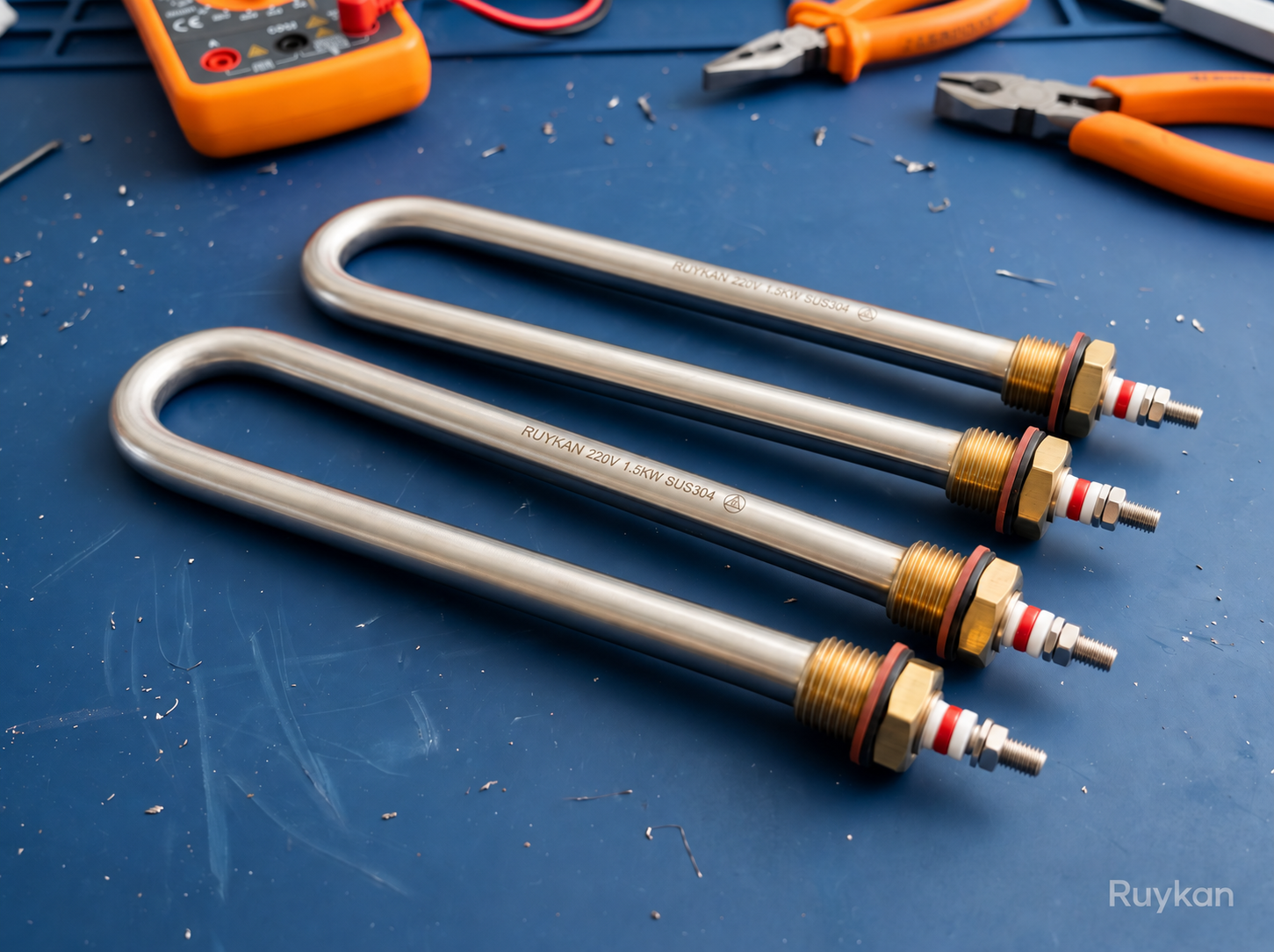
The U-shaped tubular heater for liquids encloses a nickel-chromium resistance heating wire centered within a metal tube, with insulation and thermal conductivity achieved by compacting high-purity magnesium oxide. After bending the tube into a U shape, it can be directly immersed in water, cleaning solutions, heat transfer oil, or fuel oil, with both terminals located outside the container. The surface load, sheath material, and total power must be designed according to the thermal conductivity, viscosity, corrosiveness, target temperature, and liquid flow conditions of the medium. During operation, the entire heating section must remain fully submerged and be equipped with a temperature controller, independent over-temperature protection, and low-liquid-level power-off interlock.

Basic Structure
Nickel-chromium resistance wire + compacted high-purity magnesium oxide + metal tube sheath
Structure Form
U-shaped double-ended immersion heating tube
Common Voltage
220 V / 380 V AC; special design up to 480 V
Power Supply Method
Single-phase or three-phase, wired according to the number of components, voltage, and total power

Product highlights

  • The U-shaped double-ended structure facilitates installation from the side wall or top of the tank or container, with external wiring completed outside.
  • Copper, 304 / 316L / 321 stainless steel, Incoloy 800 / 825 sheath can be selected according to water quality, oil type, and corrosion conditions.
  • Water heating uses 6–10 W/cm², light fuel oil 2–4 W/cm², heavy oil or high-viscosity medium 1–2 W/cm².
  • 6.5 / 8.5 / 10 / 12 / 14 mm tube diameter, as well as tube length, U-shape spacing, cold end, and mounting parts can be configured according to the diagram.
  • Low-liquid-level power-off, over-temperature limitation, grounding, and leakage protection collectively prevent dry burning, electric shock, and medium overheating.

Technical specifications

Basic Structure
Nickel-chromium resistance wire + compacted high-purity magnesium oxide + metal tube sheath
Structure Form
U-shaped double-ended immersion heating tube
Common Voltage
220 V / 380 V AC; special design up to 480 V
Power Supply Method
Single-phase or three-phase, wired according to the number of components, voltage, and total power
Common Pipe Diameters
6.5 / 8.5 / 10 / 12 / 14 mm
Sheath Material
Copper, AISI 304 / 316L / 321 Stainless Steel, Incoloy 800 / 825
Water Heating Surface Load
6–10 W/cm²
Light Fuel Oil Surface Load
2–4 W/cm²
Heavy Oil and High Viscosity Medium Surface Load
1–2 W/cm²
Power Tolerance
+5% / -10%
Dielectric Strength
1500 V
Withstand Voltage Test
Maximum 10 bar, actual working pressure depends on the installation parts and vessel design
Size Configuration
The total tube length, U-shaped spacing, bending radius, heating section, cold end, immersion depth, and mounting parts are designed according to the drawing.
Installation Method
The element is directly immersed in liquid and can be equipped with flanges, threaded joints, nozzles, mounting plates, or terminal boxes.
Minimum Immersion Depth
The entire heating section must always be covered by liquid, and the U-shaped bend should be at least 50 mm below the liquid surface.
Container Clearance
Maintain at least 25 mm clearance between the sheath and the container, and at least 50 mm clearance from bottom deposits
Liquid Level Protection
Install an independent low-level switch or float switch; cut off heater power when the liquid level is below the safety line
Temperature Control
Use a thermostat and an independent over-temperature limiter; the temperature sensor should be located below the minimum liquid level but above the bottom of the heater
Electrical Protection
The metal sheath is reliably grounded, with overcurrent, short-circuit, and leakage protection configured to match the rated current
Maintenance Requirements
Regularly remove scale, oil residue, and deposits; in scaling conditions, reduce surface load to control sheath temperature
Typical Applications
Water tanks, cleaning equipment, boilers, storage tanks, industrial baths, food equipment, heat transfer oil tanks, and fuel oil preheaters
Selection Parameters
Provide the medium name and composition, initial/target temperature, capacity, heating time, working pressure, power supply voltage, power, installation diagram, liquid level changes, and corrosion conditions
Industrial Heaters
Back to products
PVC-Insulated Heating Wire
01

PVC-Insulated Heating Wire

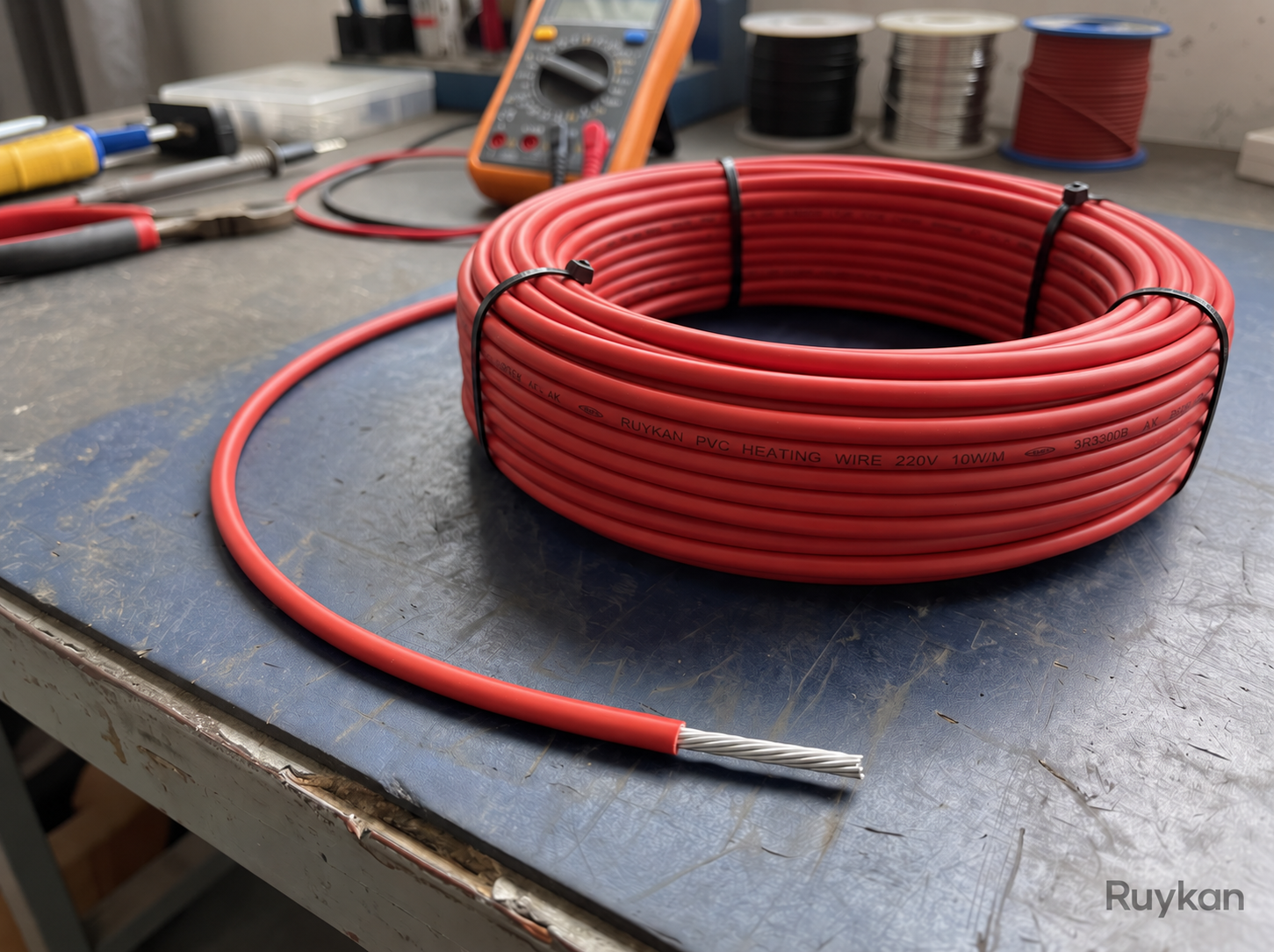
PVC insulated electric heating wires are made by winding nichrome or copper-nickel resistance wire on a fiberglass core, then extruding it with heat-resistant PVC insulation. The wires are soft and easy to shape, suitable for defogging door frames, low-temperature compensation, and low-power defrosting in refrigerators, freezers, vending machines, and ice makers. They can also be made into aluminum foil laminated heating elements. The heating length, resistance per meter, cold ends, terminals, and total power are matched according to the equipment voltage and allowable surface temperature.

  • Nichrome or copper-nickel heating wire is wound on a fiberglass core; the wire is soft and easy to shape
  • Available in heat resistance grades of 75°C, 95°C, and 105°C, which can be selected according to the allowable temperature of the equipment
  • The standard low-load structure has a maximum of 8 W/m, and the 105°C grade structure has a maximum of 12 W/m
Silicone Rubber-Insulated Heating Wire
02

Silicone Rubber-Insulated Heating Wire

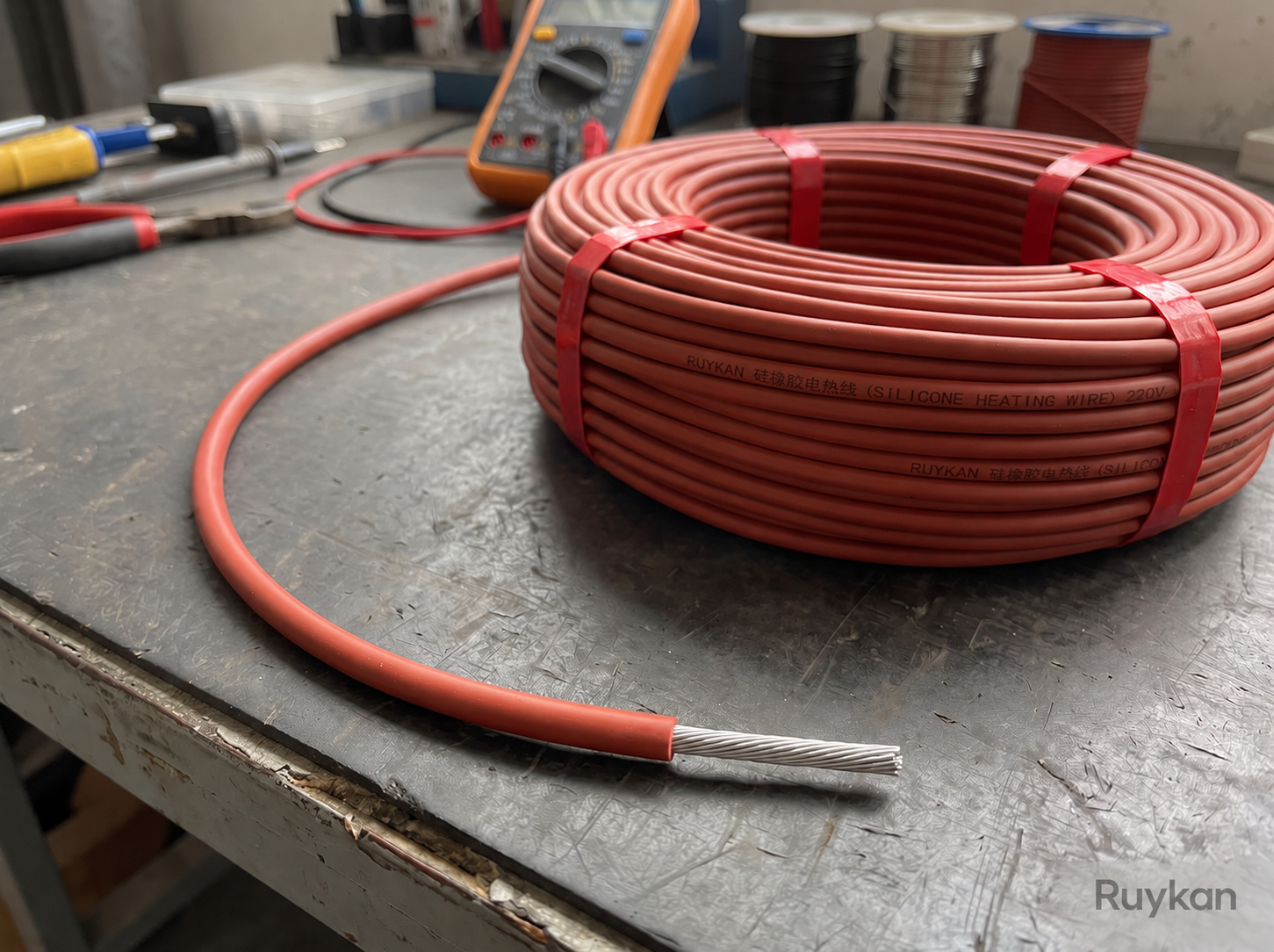
Silicone rubber insulated electric heating wires use nickel-chromium or copper-nickel resistance wires as the heating element, wound on a fiberglass core and extruded with a single or double layer of silicone rubber insulation. The wire is flexible and can be arranged along refrigerator and freezer evaporators, door frames, drip trays, drain pipes, and surfaces of small equipment, for defrosting, anti-condensation, anti-freezing, and heat preservation; the heating length, cold end, resistance per meter, total power, and leads with terminals are matched according to the equipment voltage and installation dimensions.

  • Nickel-chromium or copper-nickel heating wire wound on a fiberglass core, combining flexibility and resistance stability
  • Single or double layer silicone rubber insulation adapts to low temperature, humid, and repeated hot and cold cycling environments
  • Maximum 40 W/m line power suitable for defrosting, anti-condensation, and drain frost protection in refrigeration equipment
Aluminum-Tube Defrost Heating Wire
03

Aluminum-Tube Defrost Heating Wire

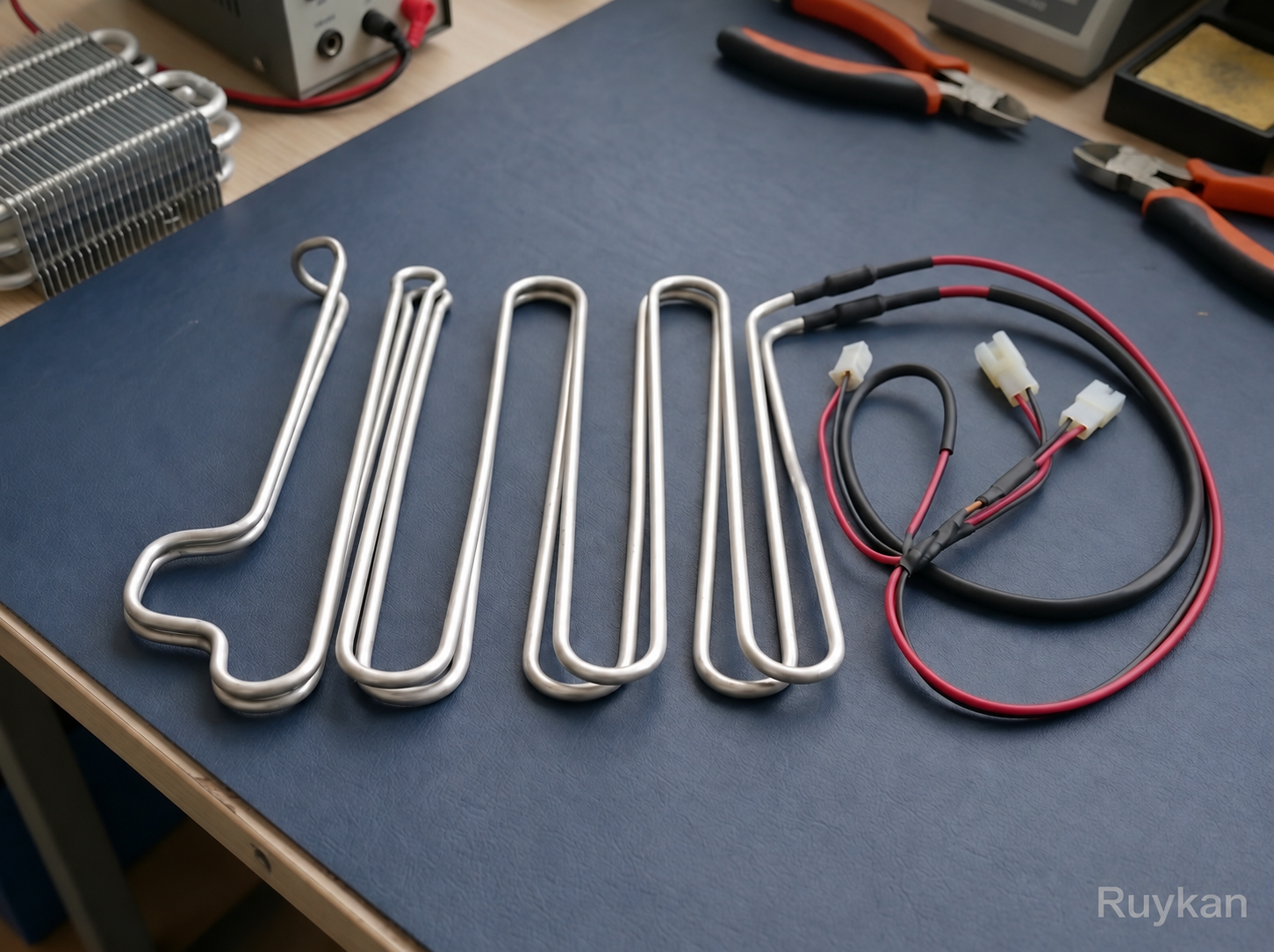
The aluminum tube defrost heating wire places single-layer or double-layer silicone rubber insulated heating wire into a formable aluminum tube. The tube transfers heat to the evaporator, water pan, or drainage area, and is used for defrosting and anti-freezing in refrigerators, freezers, display cabinets, and commercial refrigeration equipment. The tube shape, heating section, cold end, lead, and terminal can be matched according to the equipment installation space, and the system should be controlled by a thermostat, defrost controller, or thermal protector.

  • Formable aluminum tube combines heat conduction, mechanical protection, and arrangement in limited space
  • Single-layer or double-layer silicone rubber insulated heating wire is suitable for humid, frosty, and low-temperature environments
  • Maximum linear power for refrigeration equipment application is 35 W/m, facilitating the control of local heat load

Need help confirming selection or project parameters?

Send the operating environment, temperature, dimensions, and power conditions so we can help confirm the fit.

Request RFQ