PVC-Insulated Heating Wire
Industrial Heaters

PVC-Insulated Heating Wire

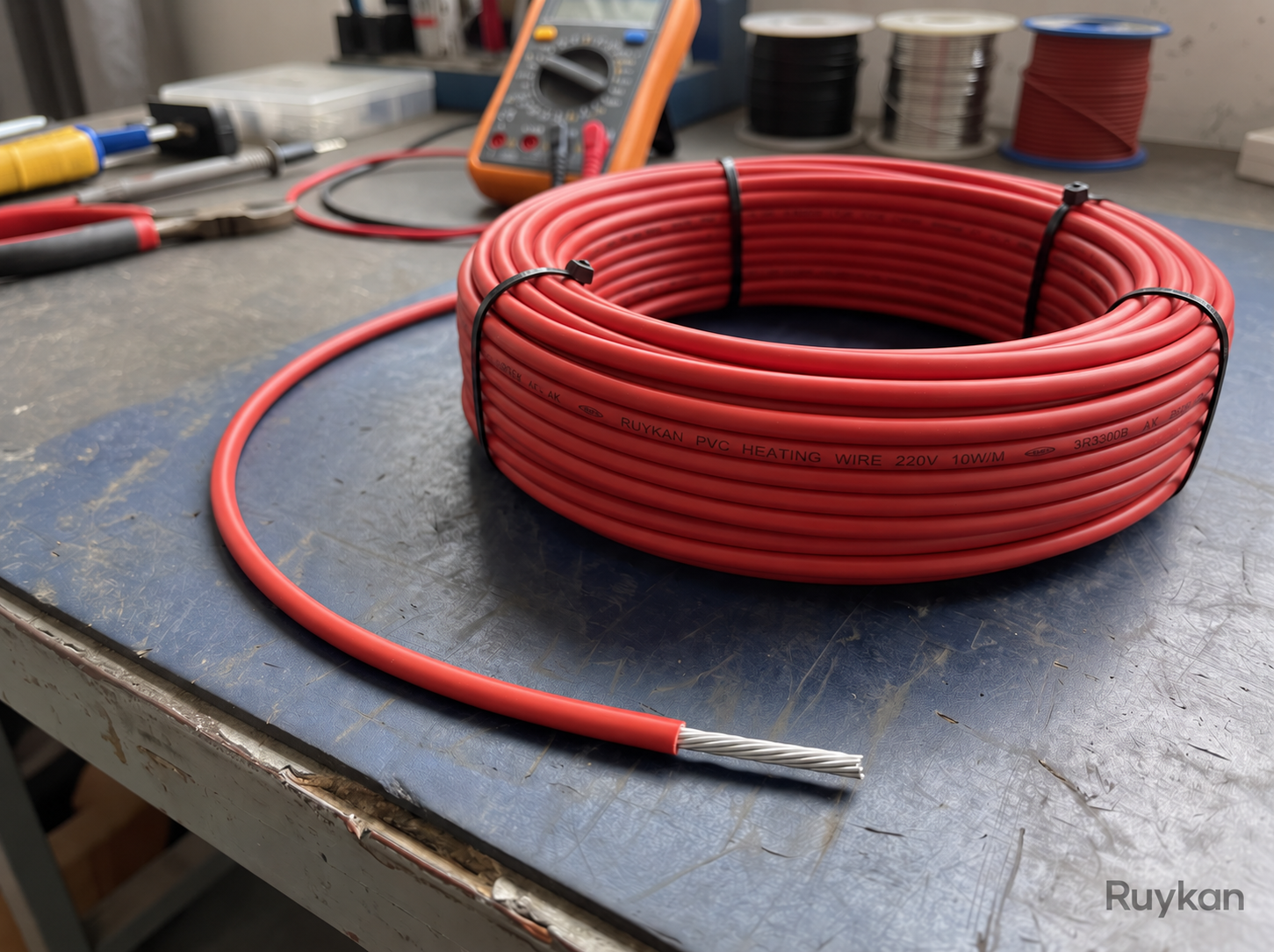
PVC insulated electric heating wires are made by winding nichrome or copper-nickel resistance wire on a fiberglass core, then extruding it with heat-resistant PVC insulation. The wires are soft and easy to shape, suitable for defogging door frames, low-temperature compensation, and low-power defrosting in refrigerators, freezers, vending machines, and ice makers. They can also be made into aluminum foil laminated heating elements. The heating length, resistance per meter, cold ends, terminals, and total power are matched according to the equipment voltage and allowable surface temperature.

Heating element
Nickel-chromium or copper-nickel resistance wire
Core wire
Fiberglass core wire
Insulating material
Heat-resistant PVC
Rated voltage
≤300 V

Product highlights

  • Nichrome or copper-nickel heating wire is wound on a fiberglass core; the wire is soft and easy to shape
  • Available in heat resistance grades of 75°C, 95°C, and 105°C, which can be selected according to the allowable temperature of the equipment
  • The standard low-load structure has a maximum of 8 W/m, and the 105°C grade structure has a maximum of 12 W/m
  • Can be made into wire-type heaters or laminated onto aluminum foil to form adhered surface heating elements
  • Suitable for preventing condensation and low-temperature compensation on refrigeration equipment door frames, not for high-temperature occasions requiring silicone rubber insulation

Technical specifications

Heating element
Nickel-chromium or copper-nickel resistance wire
Core wire
Fiberglass core wire
Insulating material
Heat-resistant PVC
Rated voltage
≤300 V
Heat resistance grade
75°C / 95°C / 105°C
Standard low-load line power
≤8 W/m
105°C rated line power
≤12 W/m
Standard outer diameter
Approximately 2.5 mm
Resistance range per meter
10–9,100 Ω/m
Heating section and cold end
Length designed according to equipment size, supply voltage, and target total power
Finished product form
Wire-type heater or aluminum foil laminated heating element
End treatment
Use a sealed heating section with a cold-end transition in wet areas; terminals and connectors are configured according to the equipment interface
Typical Applications
Prevent condensation, provide low-temperature compensation, and low-power defrosting for refrigerators, freezers, vending machines, and ice makers
Control and Protection
Use with corresponding thermostats, timer controllers, or thermal protectors; operating temperature must not exceed the selected PVC rating
Usage Restrictions
Not for use on continuously high-temperature surfaces, steam environments, or heating locations exceeding PVC temperature ratings
Selection parameters
Provide voltage, heating length, total power or resistance per meter, PVC grade, cold end, terminals, and installation environment
Industrial Heaters
Back to products
Silicone Rubber-Insulated Heating Wire
01

Silicone Rubber-Insulated Heating Wire

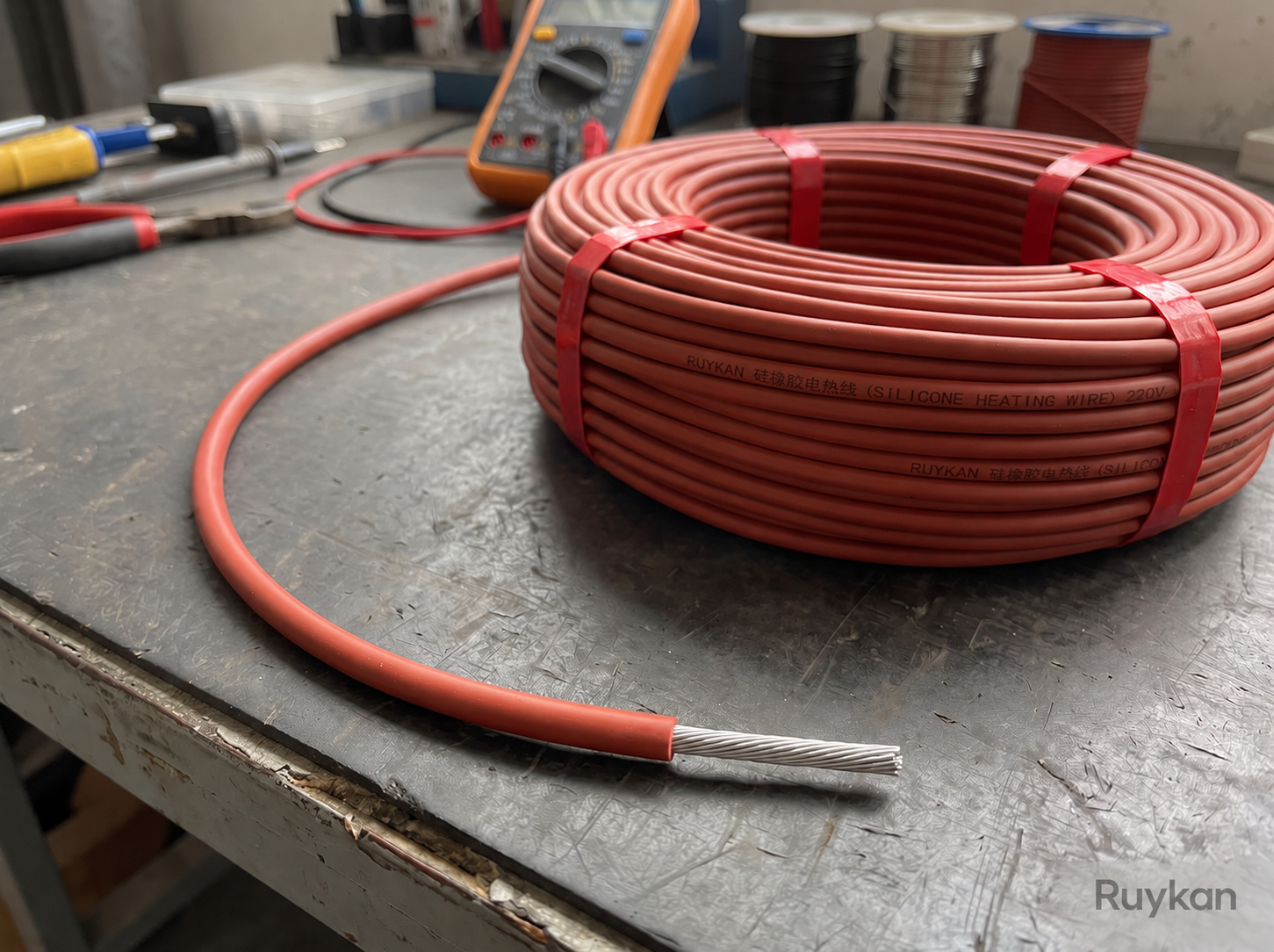
Silicone rubber insulated electric heating wires use nickel-chromium or copper-nickel resistance wires as the heating element, wound on a fiberglass core and extruded with a single or double layer of silicone rubber insulation. The wire is flexible and can be arranged along refrigerator and freezer evaporators, door frames, drip trays, drain pipes, and surfaces of small equipment, for defrosting, anti-condensation, anti-freezing, and heat preservation; the heating length, cold end, resistance per meter, total power, and leads with terminals are matched according to the equipment voltage and installation dimensions.

  • Nickel-chromium or copper-nickel heating wire wound on a fiberglass core, combining flexibility and resistance stability
  • Single or double layer silicone rubber insulation adapts to low temperature, humid, and repeated hot and cold cycling environments
  • Maximum 40 W/m line power suitable for defrosting, anti-condensation, and drain frost protection in refrigeration equipment
Aluminum-Tube Defrost Heating Wire
02

Aluminum-Tube Defrost Heating Wire

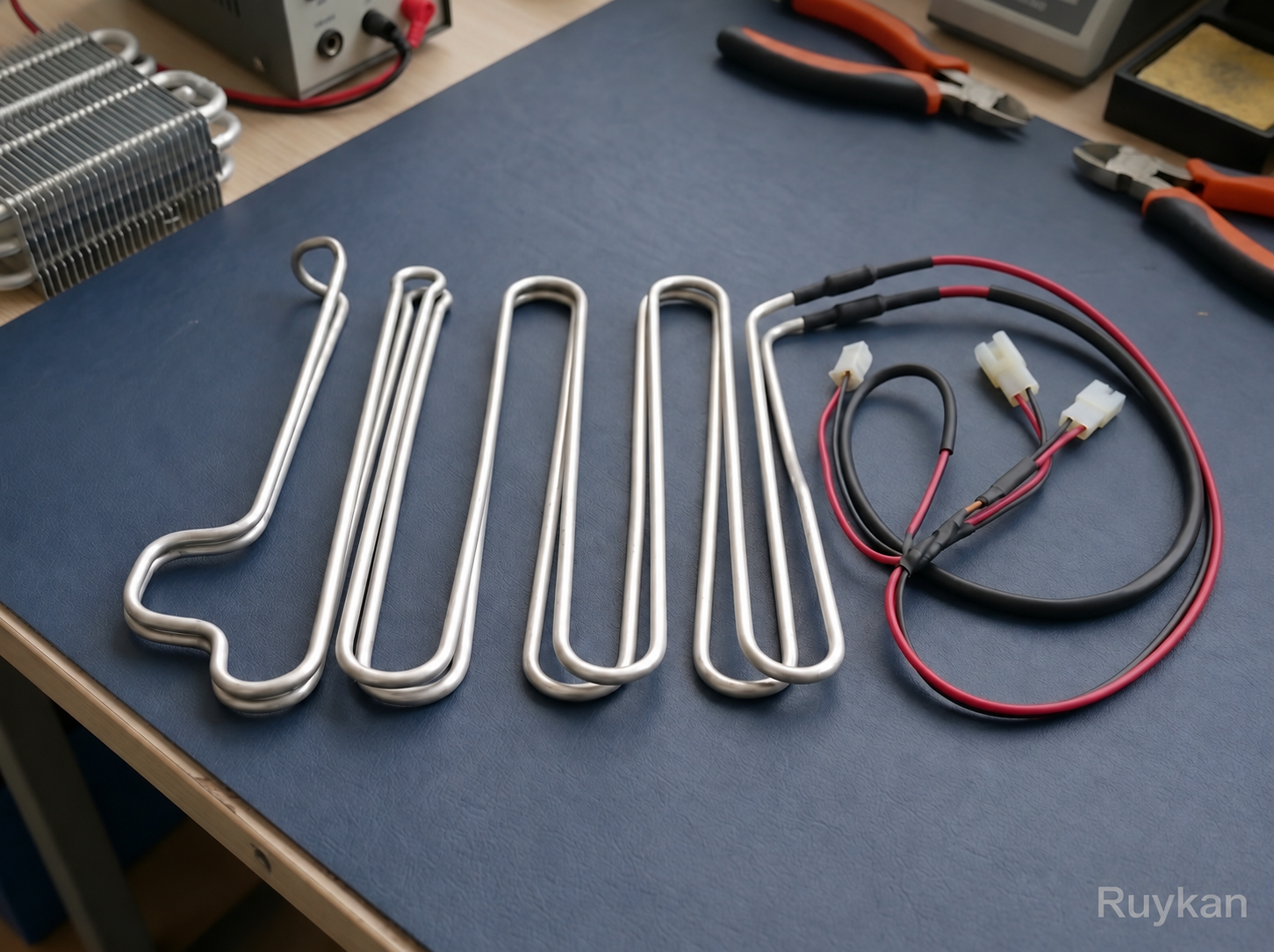
The aluminum tube defrost heating wire places single-layer or double-layer silicone rubber insulated heating wire into a formable aluminum tube. The tube transfers heat to the evaporator, water pan, or drainage area, and is used for defrosting and anti-freezing in refrigerators, freezers, display cabinets, and commercial refrigeration equipment. The tube shape, heating section, cold end, lead, and terminal can be matched according to the equipment installation space, and the system should be controlled by a thermostat, defrost controller, or thermal protector.

  • Formable aluminum tube combines heat conduction, mechanical protection, and arrangement in limited space
  • Single-layer or double-layer silicone rubber insulated heating wire is suitable for humid, frosty, and low-temperature environments
  • Maximum linear power for refrigeration equipment application is 35 W/m, facilitating the control of local heat load
U-Shaped Liquid Tubular Heater
03

U-Shaped Liquid Tubular Heater

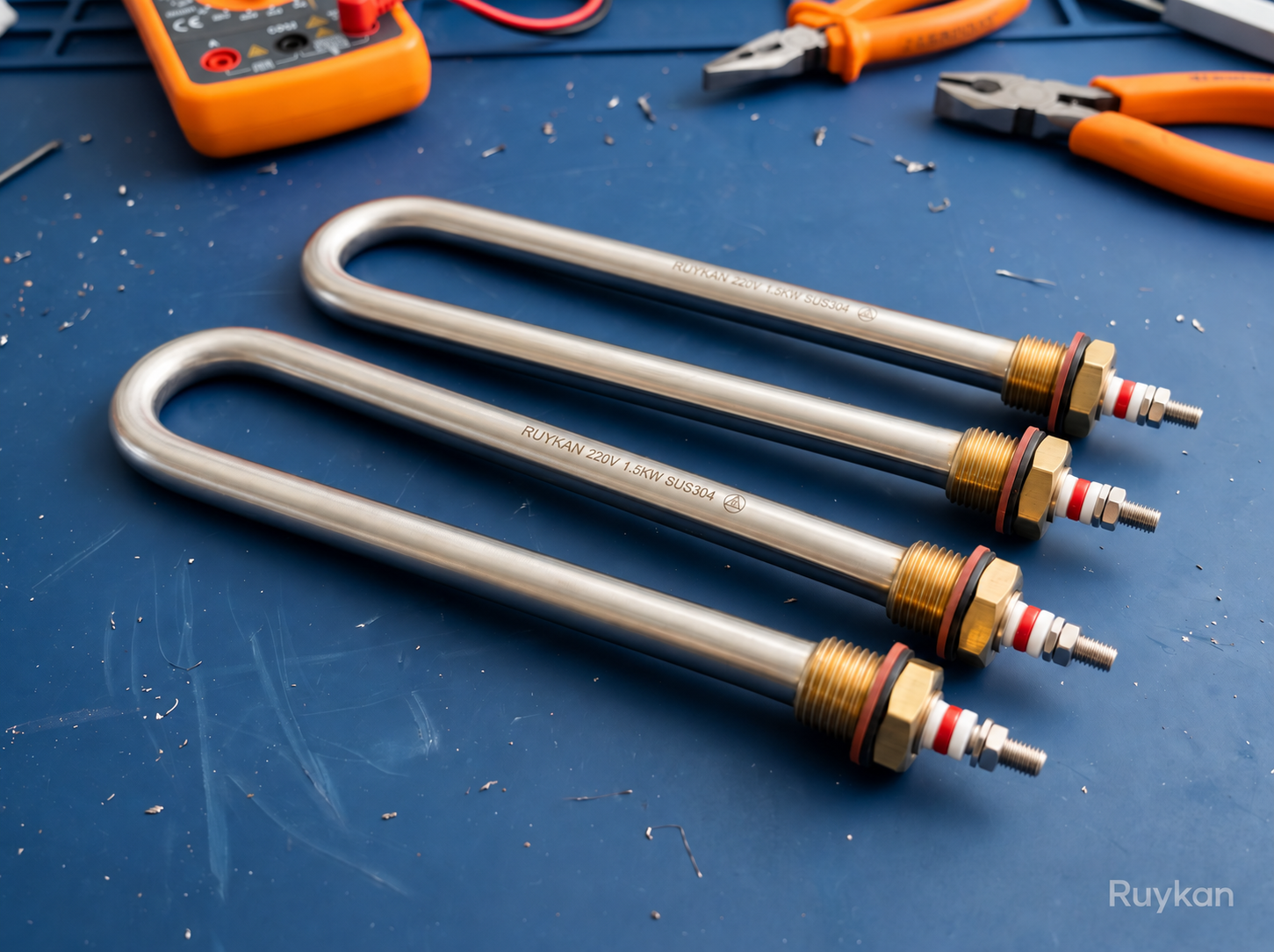
The U-shaped tubular heater for liquids encloses a nickel-chromium resistance heating wire centered within a metal tube, with insulation and thermal conductivity achieved by compacting high-purity magnesium oxide. After bending the tube into a U shape, it can be directly immersed in water, cleaning solutions, heat transfer oil, or fuel oil, with both terminals located outside the container. The surface load, sheath material, and total power must be designed according to the thermal conductivity, viscosity, corrosiveness, target temperature, and liquid flow conditions of the medium. During operation, the entire heating section must remain fully submerged and be equipped with a temperature controller, independent over-temperature protection, and low-liquid-level power-off interlock.

  • The U-shaped double-ended structure facilitates installation from the side wall or top of the tank or container, with external wiring completed outside.
  • Copper, 304 / 316L / 321 stainless steel, Incoloy 800 / 825 sheath can be selected according to water quality, oil type, and corrosion conditions.
  • Water heating uses 6–10 W/cm², light fuel oil 2–4 W/cm², heavy oil or high-viscosity medium 1–2 W/cm².

Need help confirming selection or project parameters?

Send the operating environment, temperature, dimensions, and power conditions so we can help confirm the fit.

Request RFQ